
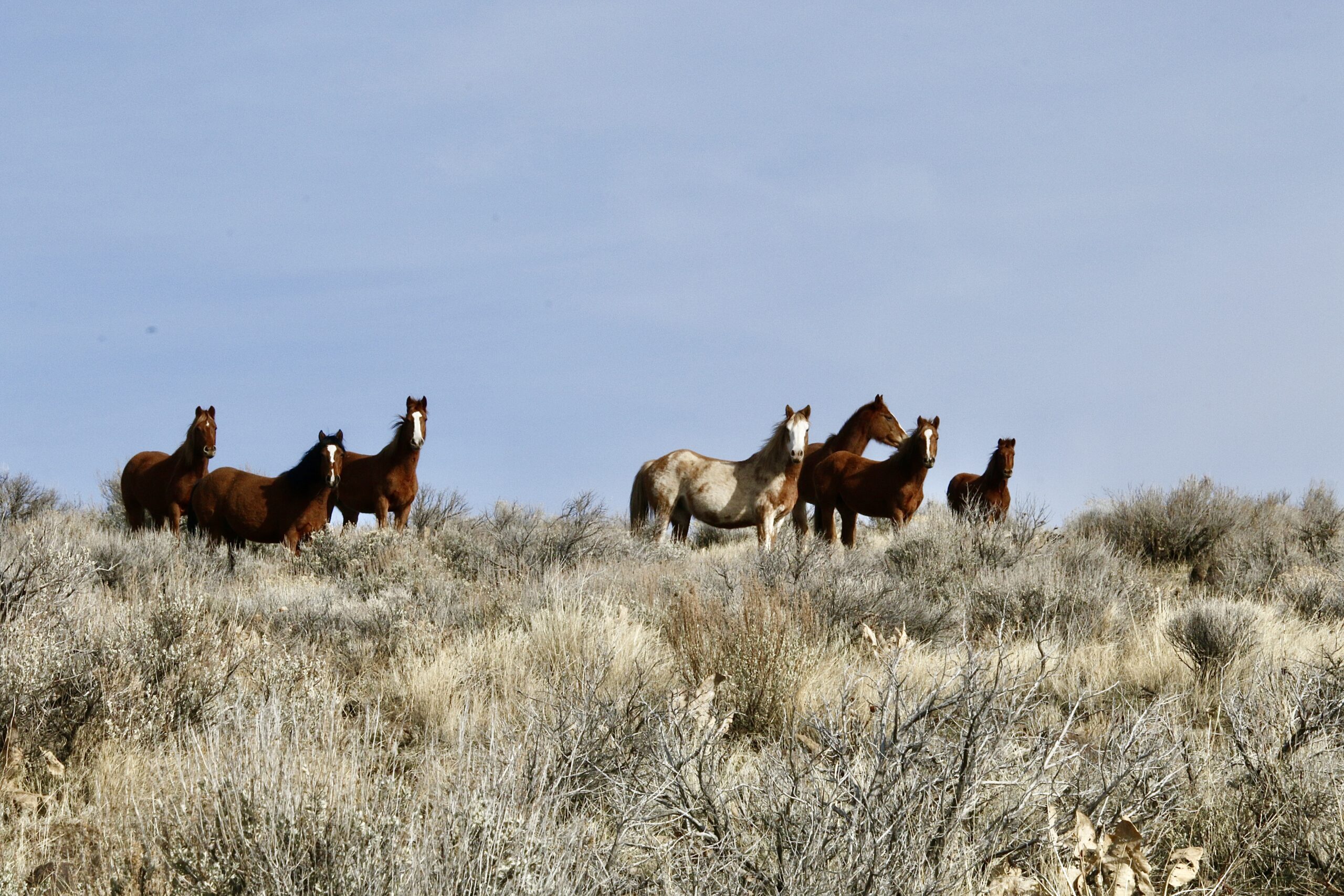
Jan. 28, 2026: Harem band off of Herd Management Area in Northern Nevada.
By Ryan McCarthy
Deserts are defined by their lack of available water; this lack of water severely limits life most of the time. The majority of Bureau of Land Management Herd Management Areas (HMAs) and U.S. Forest Service Wild Horse Territories (WHTs) inhabited by wild horses and burros are located within the Great Basin Desert. This closed, highly arid system is characterized by extreme precipitation limits, large seasonal weather variations, and a persistent risk of drought. Nevada, situated at the center of the Great Basin Desert, is the driest state in the United States, with an average annual precipitation of 7 to 10 inches. Precipitation varies significantly, from 5 to 6.5 inches on the lowest valley floors in the southern Great Basin—divided between winter snowfall and summer thunderstorms—to as much as 40 inches at high-altitude peaks in the northeast, where it primarily falls as snow. The combination of aridity, extreme seasonal temperature fluctuations, and climate change can result in severe and persistent drought conditions.
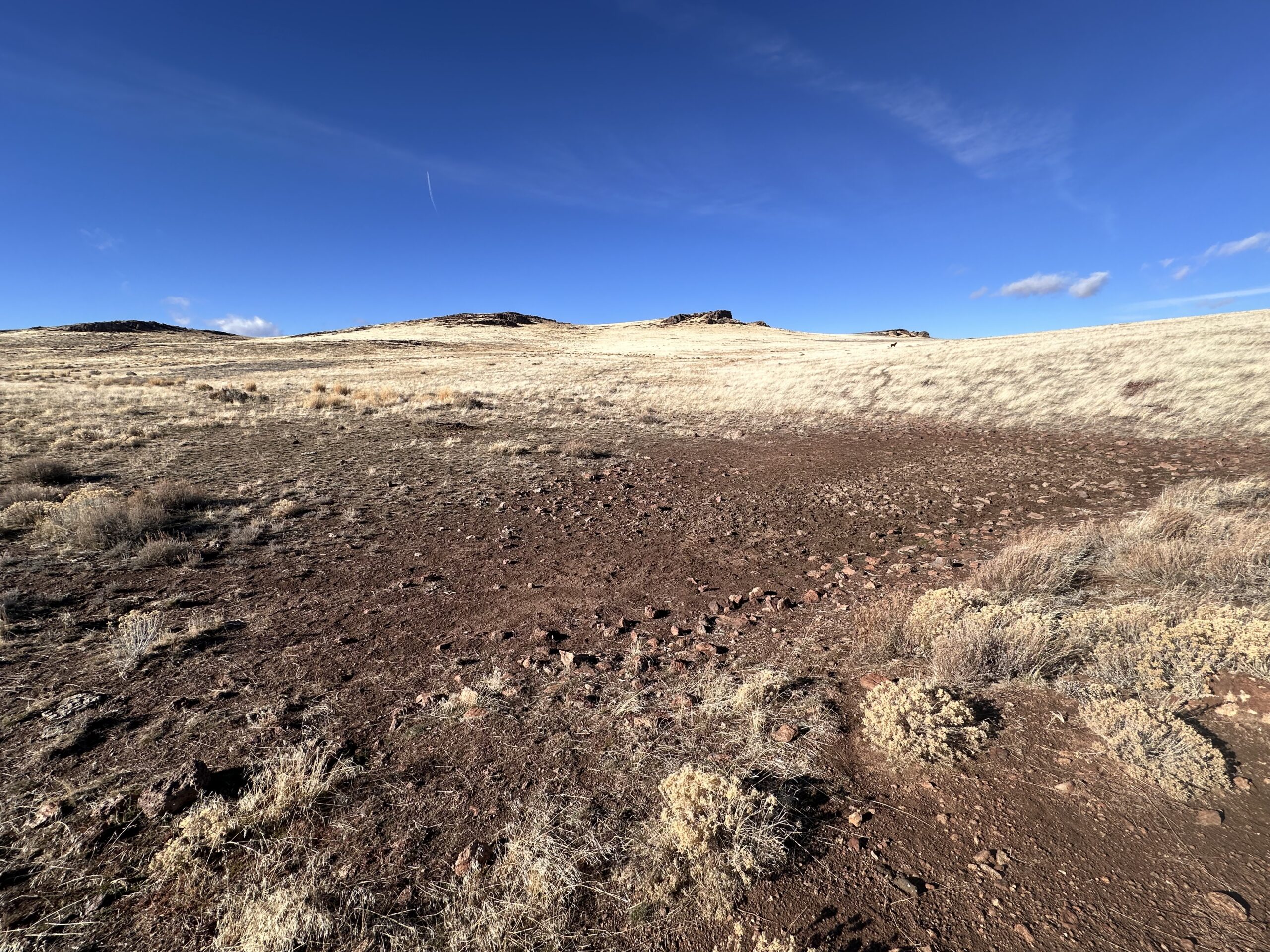
Dec. 17, 2025: Northern Nevada HMA. dry reservoir with single stud in top right corner below rock outcrop. Note the lack of snowpack and dry soils.
The Great Basin is currently experiencing a drought attributed to a phenomenon known as a warm drought. Warm droughts intensify water deficits by increasing atmospheric moisture demand, regardless of precipitation levels. This warm, dry air alters winter precipitation patterns, resulting in rain instead of snow or rain falling on existing snow, which causes premature melting of snowpacks. The loss of this natural reservoir reduces water availability during the hotter, drier summer months. Consequently, the effects of warm droughts on water resources and ecosystems differ depending on whether vegetative or hydrologic indicators are considered.
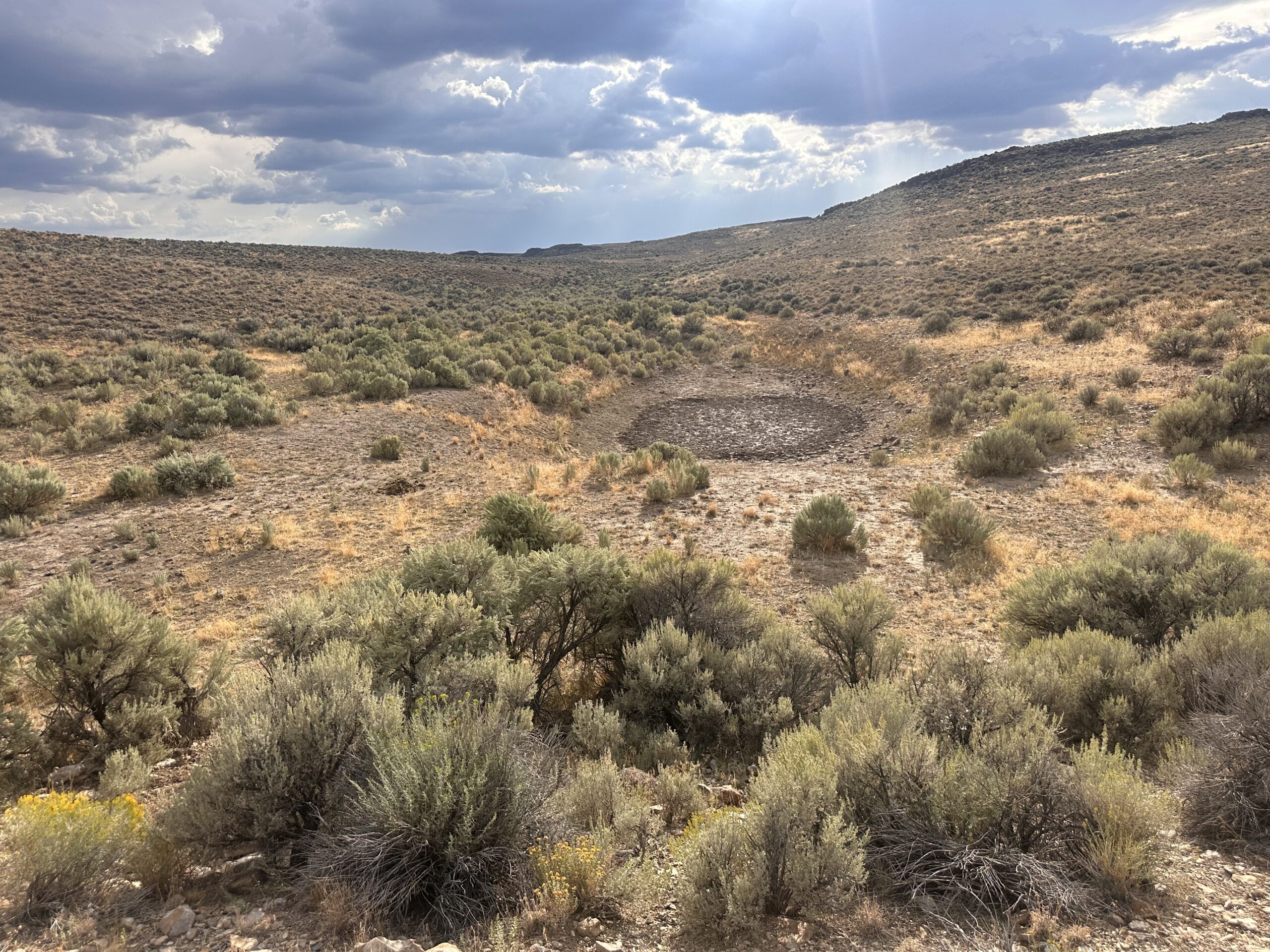
August 2025: Dry Pit on Northern Nevada Herd Management Area with monsoon moisture pattern moving into region. Monsoon patterns occur from mid-June to late September. In 2025, precipitation from monsoon patterns were highly localized with some areas receiving no precipitation and others receiving torrential rains that caused localized flooding and washouts.
Vegetative drought typically precedes hydrologic drought, and in early 2025, evidence in the region showed vegetative drought pattern emerging. At the onset of a dry period, vegetative drought indicators generally emerge first, even when surface water levels remain normal. These conditions can develop rapidly, often within weeks, as plants deplete available soil moisture during heatwaves. This leads to elevated evapotranspiration rates, resulting in rapid leaf stress and browning. Such changes reduce the availability and quality of forage for wildlife and livestock and increase wildfire fuel loads.
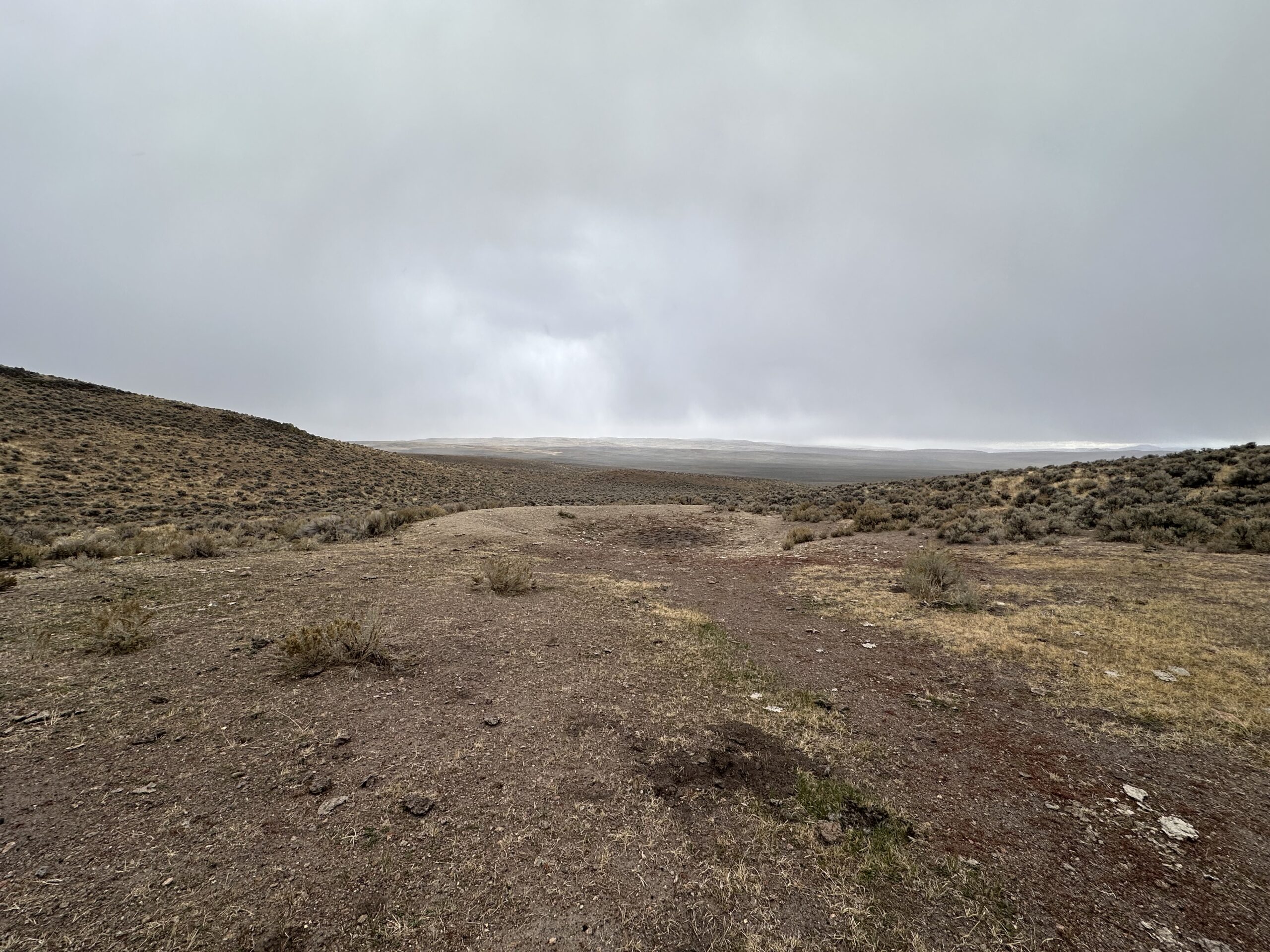
September 2025: Dy pit on Northern Nevada Herd Management Area during monsoon season. Note the precipitation in the background falling in the form of Virga. Virga is a meteorological phenomenon where precipitation such as rain or snow falls from a cloud but evaporates or sublimates before reaching the ground. The dry air mass between the ground and the base of the cloud quickly strips away any moisture as soon as it encounters the parched air.
If a warm drought persists, the consequences of vegetative drought, such as reduced moisture availability and increased plant transpiration, can lead to hydrologic drought by diminishing groundwater recharge. By early 2026, hydrologic drought conditions were evident in the region. Hydrologic droughts are defined by deficits in both surface and subsurface water supplies, as elevated temperatures and increased evaporation draw down reservoirs and water sources, which can cause springs to go dry. Because hydrologic droughts often have a slow onset and a slow recovery, they can take years to develop and years to recover, as water infiltrates deep aquifers. Prolonged hydrologic drought therefore reduces both the volume of surface water and the number of available water sources.
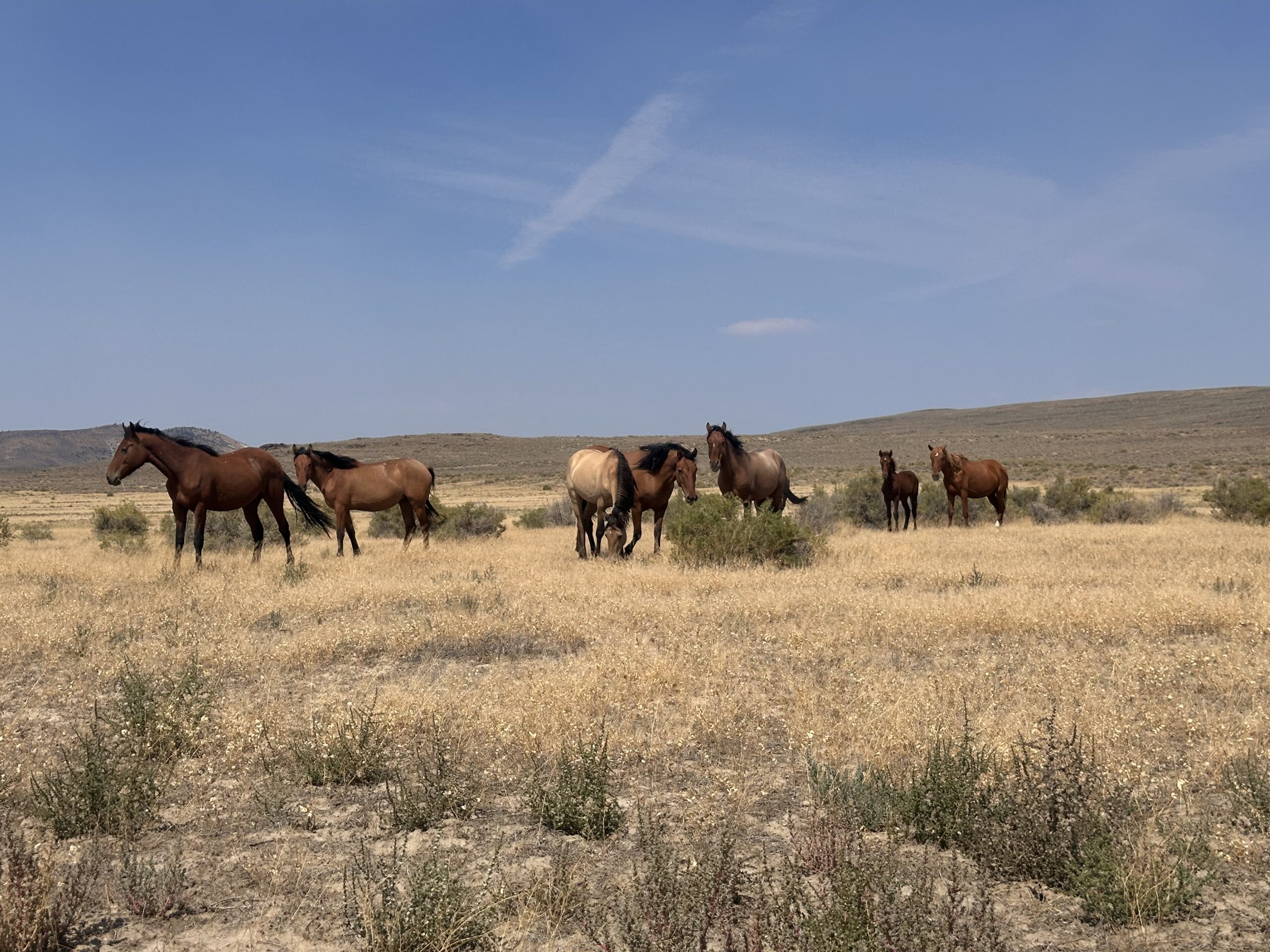
September 2025: Northern California horses several miles off Herd Management Area seeking forage.
Prolonged hydrologic droughts have major impacts on wild horse and burro populations that can result in mass mortality events, in which a significant number of individuals of a single species perish within a short timeframe due to limited forage and water. These drought conditions create severe challenges for wild horses and burros inhabiting the range, resulting in managers taking emergency actions which can including supplemental feeding, water hauls, and gather and removals to prevent mass mortality events. With limited high-nutrition forage and water, horses must travel greater distances for resources, often beyond the boundaries of HMAs and WHTs. As larger groups of animals congregate at fewer water sources, the impact on springs and other water bodies becomes more concentrated and severe compared with non-drought periods, when smaller groups are dispersed across the landscape. In areas with large horse populations, resource scarcity during drought intensifies both interspecific and intraspecific competition, placing additional strain on the animals and the ecosystem.
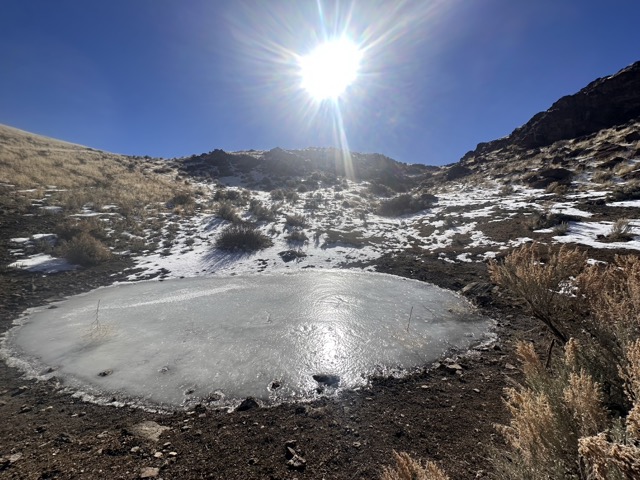
Jan. 19, 2026 – Northern Nevada HMA spring head and pit monitored by RTF. This water source remained frozen from January through March. Note the limited snowpack on the northeast exposure and the lack of snapback on northwest exposure.
If drought conditions persist as forecasted, the range is expected to experience a prolonged and challenging summer. In the Northern California and Northern Nevada HMAs, where Return to Freedom is monitoring conditions, the 2025 vegetative drought had progressed to a hydrologic drought by early 2026. Drought influences water availability throughout the year. During the winter, much of the region experienced warm storms that produced rain or rain-on-snow events, further reducing an already poor snowpack. Between these warm storms, the Nevada side experienced cold conditions, leaving most available standing water frozen from January through March.
Recently, water sources that are typically full or flowing in late spring were observed at extremely low levels or completely dry, conditions usually not seen until late summer. In one monitored HMA, very few water sources exist under normal circumstances. The wide shallow lake depicted in the video, which is nearly empty, is the largest of the two primary interior water sources. Wild horses require substantial daily water intake, approximately 50 mL/kg, which translates to 7 to 10 gallons per day for an 1,100-pound horse and up to 17 gallons per day for a pregnant or nursing mare of the same weight. For the 69 horses shown in the video, the minimum daily water requirement is estimated at 400-600 gallons.
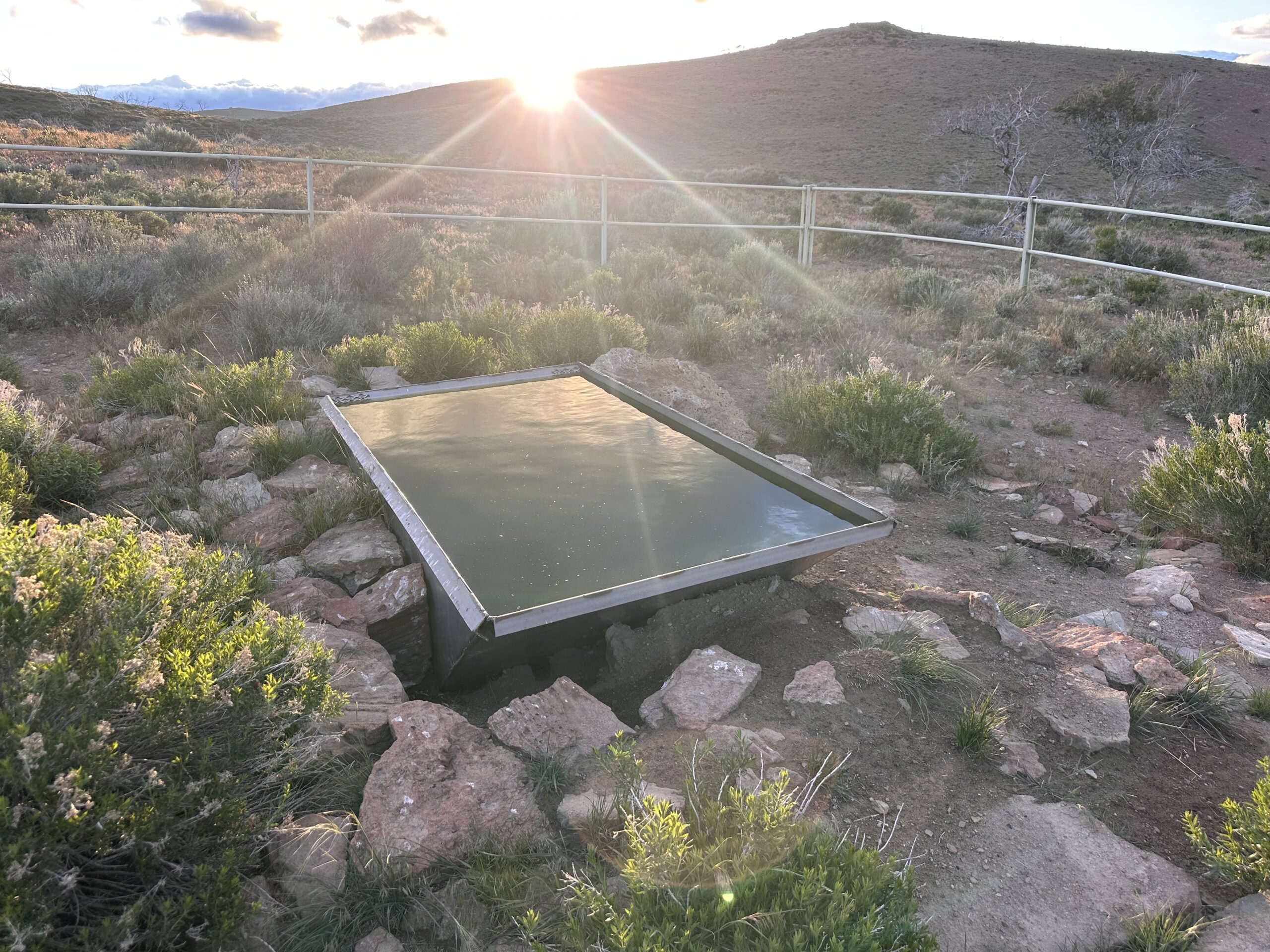
Wildlife Water Development aka Guzzler with drinker inside enclosure.
These resource limitations and the concentrated impacts of large groups of animals during drought conditions underscore the need for comprehensive population management, including fertility control, water development, and range and riparian restoration. As climate change intensifies and weather patterns shift, wildlife developments such as Guzzlers will become increasingly necessary. Western Nevada is the fastest-warming area of the county, and the continued trend of warming winters with reduced snowpack means there will be an increased need for water development. Implementing humane and effective fertility-control vaccines is essential to reduce herd growth rates and mitigate ecosystem impacts in these very limited systems, ensuring that sustainable populations of horses and burros remain free and wild on healthy, productive rangelands.
More Field Notes:
On-range team adds much-needed ATV
Bonding with a band of bachelor stallions
Watching wild horses in Western Nevada
Spring in full spring for Great Basin wild horses