
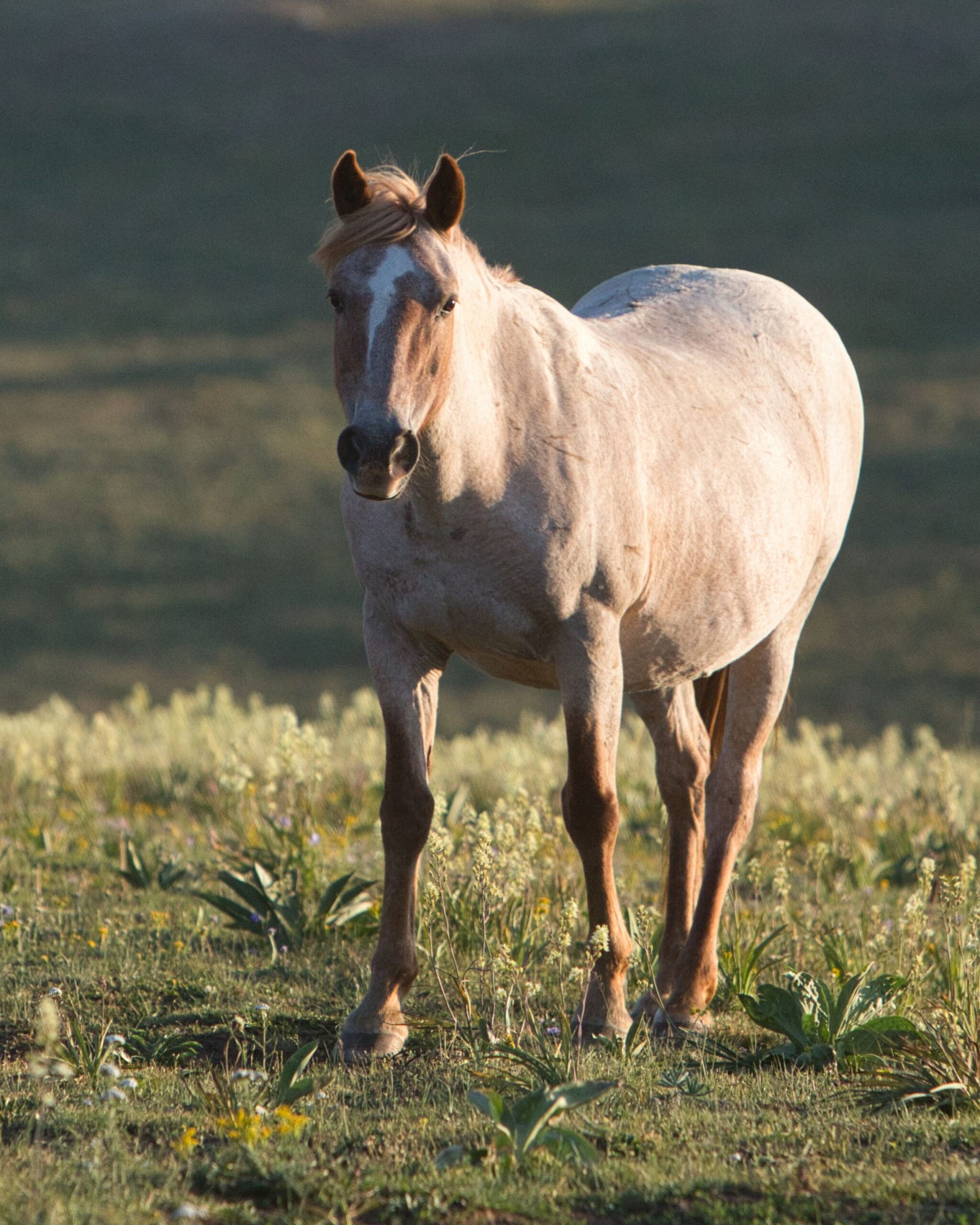
Photo by Meg Frederick
In a victory for the kind of painstaking, comprehensive work done every day by Return to Freedom’s advocacy team, the Bureau of Land Management recently made changes to its wild horse and burro sales policy.
The changes to the sales policy disincentivize making money from selling a wild horse for slaughter and appear to give law enforcement, lawyers, and advocates the needed teeth to go after those who do.
As with any policy change, continued vigilance will be needed. However, this looks to be a positive step toward protecting wild horses from the threat of entry into the slaughter pipeline via malicious buyers.
It illustrates the methodical way we work in a landscape filled with legal and bureaucratic obstacles.
RTF regularly communicated with agency officials up and down the frequently changing BLM leadership ladder about more than just the need for change.
We gathered information from our partners and activists about BLM-branded wild horses and burros sold to these kill pens and worked with partner organizations and supporters to push for change.
We presented evidence that showed wild horses and burros were being sold to slaughter as quickly as one day after the new owner received title.
Just as importantly, we were able to dig into the policy, showing not just who was taking advantage of the loophole, but also how.
We held meaningful follow-up discussions with all of our partners to help push along the idea of getting changes made, even if they weren’t perfect, to begin slowing the number of wild horses and burros being shipped to slaughter.
During this time, an RTF team member, Celeste Carlisle, also held a seat on the National Wild Horse and Burro Advisory Board, enabling us to better represent our concerns there.
She worked with other board members to ask questions and make recommendations, stressing the board’s collective concerns about the need to prevent wild horses and burros from falling through the cracks.
Under the new changes:
- The bill of sale now says buyers cannot “recklessly or negligently” sell a horse to slaughter, directly or indirectly, placing the onus on the buyer.
- The sales fee increased from $25 to $125.
To be clear, we have been and remain adamantly opposed to sales authority since its introduction in 2004. Under it, the BLM was directed to sell “without limitation” wild horses and burros ages 10 and older or younger horses that have not been adopted after three tries, often for $25 or even less.
Unlike an adoption, a buyer immediately receives title to the horse or burro, and the animal immediately loses what measure of protection it had under the law.
Buyers previously signed a bill of sale requiring that they agree not to “knowingly” sell or transfer ownership to slaughter. That made proving intent and prosecuting bad actors difficult.
What seems a simple fix required a tedious process of, among other things, ensuring proposed changes didn’t run afoul of other laws and policies.
Over the past decade, the BLM has sold outright more than 15,000 wild horses and burros.
The process of making substantive change for the good of wild horses, burros and the shared public lands on which they depend can be frustrating. Often, there are legal limitations to good ideas, and finding ways around or through them takes time and strategy.
We know that to people who love and wish to protect wild horses, it can all feel like screaming into the void.
These first changes will not stop every wild horse from falling through the cracks after sale or adoption, but we are heartened that this sends a stronger message that “flipping” a wild horse at auction is actually not acceptable and will be prosecuted. Transparency and accountability remain crucial.
We remain committed to shoring up the sales policy while continuing to advocate for systemic changes that result in more humane and sustainable management of wild horses and burros to keep them on the range, and passing federal legislation banning the slaughter, or export for slaughter, of any equine.