
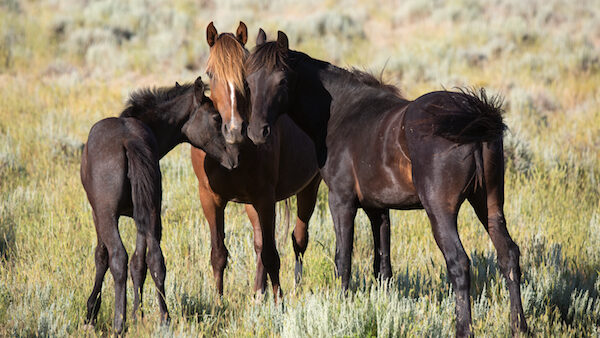
Photo taken on the Salt Wells Herd Management Area in Wyoming’s Checkerboard by Meg Frederick.
Today marks the 54th anniversary of the enactment of the Wild and Free-Roaming Horses and Burros Act — a reminder of the need to protect wild herds and the fragile rangelands upon which they depend.
Congress passed the Act unanimously, declaring that:
“Wild horses and burros are living symbols of the historic and pioneer spirit of the West; that they contribute to the diversity of life forms within the nation and enrich the lives of the American people; and that these horses and burros are fast disappearing from the American scene.”
On her drive to work, a secretary named Velma Bronn Johnston saw blood coming from mustangs the back of a stock truck, on their way to slaughter. She set out to save Nevada’s remaining wild horses.
More than two decades later, in 1971, with the backing of animal-welfare groups, a growing environmental movement and an army of children, Johnston (dubbed “Wild Horse Annie” by her detractors), succeed in passing the Act.
At a basic level, the law has succeeded:
Wild horses and burros still roam our remote rangelands. In March, the Bureau of Land Management estimated there were 73,130 on land it oversees.
The law did not set up a humane, forward-looking management plan for wild horses, however. It handed broad authority to set population targets and maintain them to the BLM and U.S. Forest Service.
The Act has since been amended (some say gutted), including to allowing helicopters to round up wild horses in a failed attempt to control wild horses and burro numbers. More than 64,000 are now warehoused off-range government holding.
And yet, the Act remain a touchstone for people around the world who are emotionally invested in the future of these iconic symbols of freedom.