
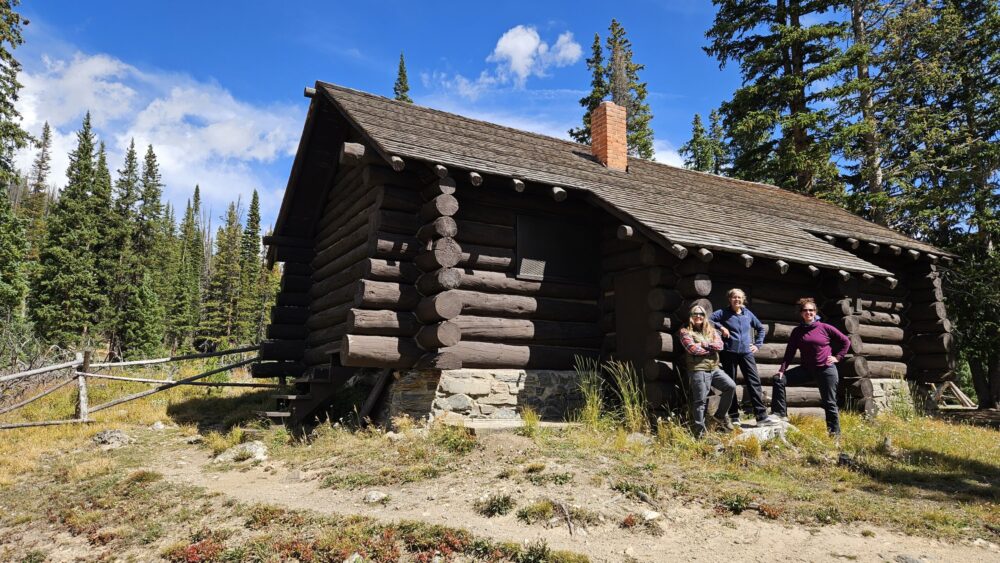
Visiting the cabin where Jay Kirkpatrick lived during his time as a ranger at Rocky Mountain National Park.
By Celeste Carlisle, RTF Biologist and Science Program Manager
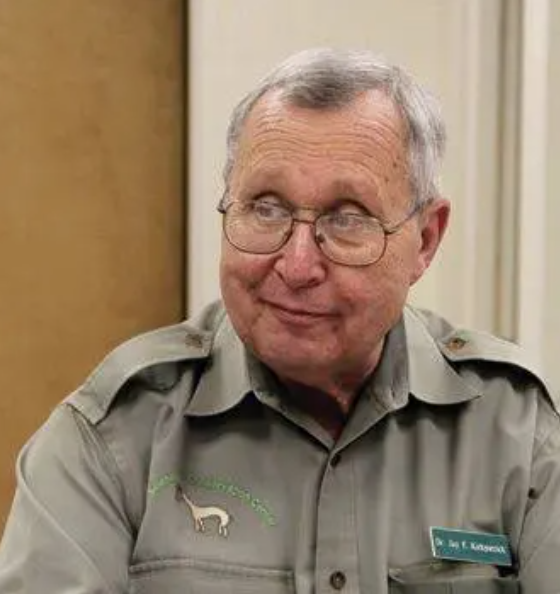
Dr. Jay Kirkpatrick
Rocky Mountain National Park’s (RMNP) alpine meadows, sparkling lakes, and granite mountains are home to elk, marmots, pika, and moose.
During summers in the 1960s, RMNP was also the home to a beloved friend of Return to Freedom, Dr. Jay Kirkpatrick. For six summers, Jay was a ranger in the park, and lived in a cabin near the shore of Lake Irene.
During the years he rangered, RMNP would have been handling ever-increasing visitors (numbers of climbers were becoming so vast that the cables which helped assist people up the latter portions of Longs Peak were eventually removed in 1973), the Wilderness Act of 1964 was relatively new (in fact, after contentious discussions about how much and which parts of the park would be designated “Wilderness,” in 1976, 240,000 of the Park’s 265,679 acres were designated as such), and research about the alpine tundra was being conducted along Trail Ridge Road.
In the early days of the 1971 Wild and Free-roaming Horses and Burros Act, conversations with agency biologists about the high reproductive growth rate of wild horses led to his research on fertility control in free-roaming horses.
Years later, he established the Science and Conservation Center (SCC) on the grounds of Zoo Montana, which manufactures the wildlife immunocontraceptive vaccine PZP, and trains people in the development of fertility control projects, and the handling and remote delivery of the vaccine.
Jay died in 2015. He had urged increasing fertility control to manage wild horses, so that round ups could be reduced in many areas or eliminated altogether in others, and he was a trusted advisor and friend to RTF.
He engaged in complex conversations about establishing and managing a wild horse sanctuary, and, in the early days of such work, helped us to implement a fertility control program so that family bands could continue to live together on the sanctuary.
I sit on the SCC board, and this fall, I embarked on a pilgrimage, with SCC’s senior biologist Kayla Grams, and science liaison Melissa Esser, to Jay’s cabin in Rocky Mountain National Park.
The cabin is no longer in use. It is boarded up and quiet. No rangers lean from its windows to talk with visitors on their way to Lake Irene, or head out from its landing to hike the trails.
But Jay was there in spirit, reminding us of the natural world’s wonder, that change comes slowly, that tenacity is essential, and that caring for the many species who share this place with us truly matters.
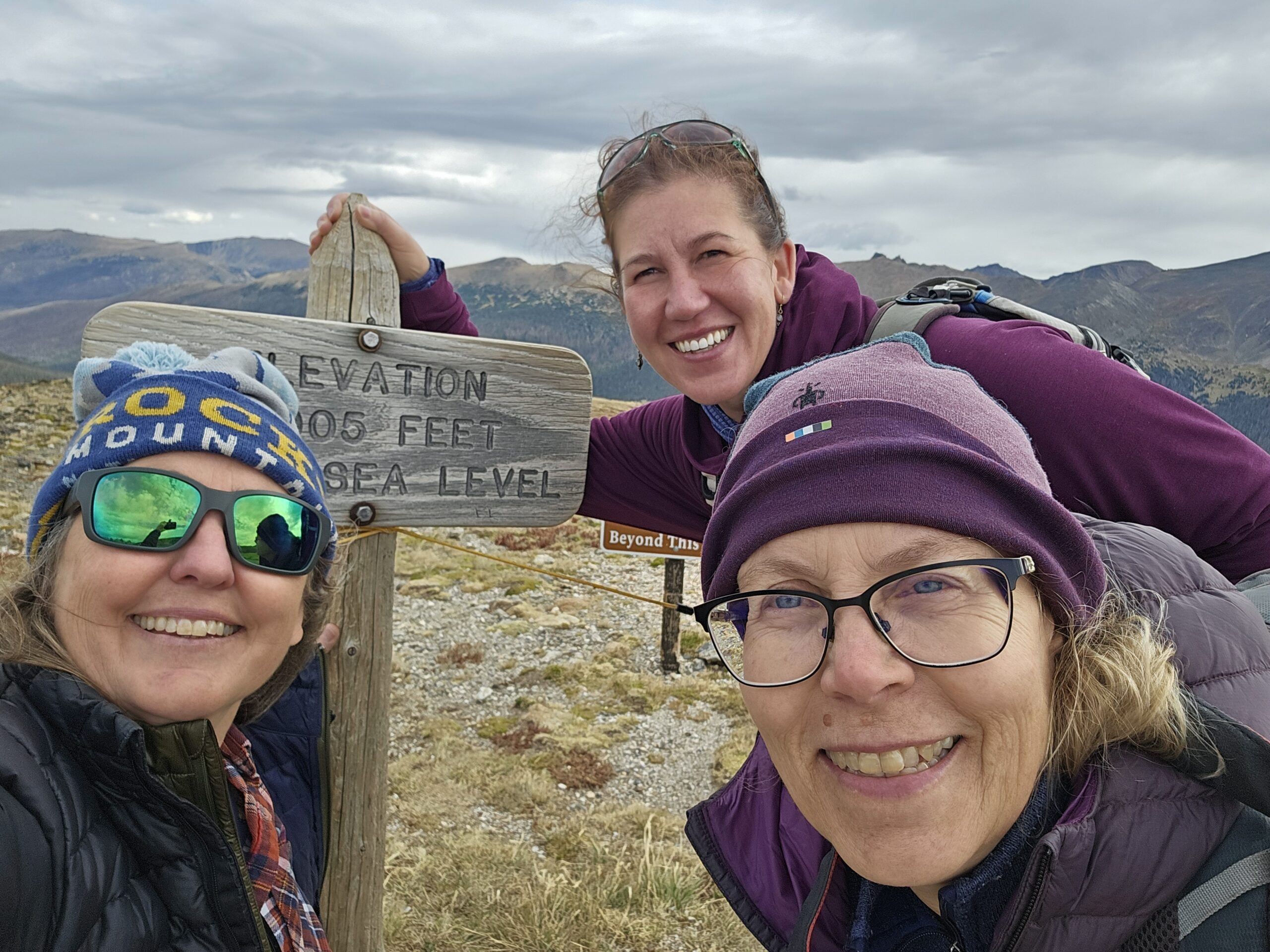
Celeste Carlisle of RTF, left, with Science & Conservation Center Senior Biologist Kayla Grams, front right, and SCC science liaison Melissa Esser.